The author claims that these five games are largely overlooked and disregarded today because of the availability of more complex or visually stimulating games on later platforms. Still, he reasons that they are still valuable because the skills aquired by playing these games are the building blocks of the skills one needs to play later games. I agree with this, and also submit that these games have become 'classics' because of their adaptability. That is, it is not only the skills these games require that make them stand out in our memories as special and interesting, but the combinations of their formal and narrative elements with these skills. In this sense I argue that even though people may not regularly pick up an Atari to play Space Invaders, for example, people still encounter most of the qualities of this and other classics in later games (Halo, for example) that attracted people to games like Space Invaders in the first place.
There's a definite parallel between book-literature and videogames in this sense: the true classics are those works which are constantly emulated, improved upon, and updated to fit the changing times. Just as, for example, MacBeth was updated for the movie Scotland, PA (2001), Super Mario Brothers has been rehashed for today's gamer in Half-Life, for one example.
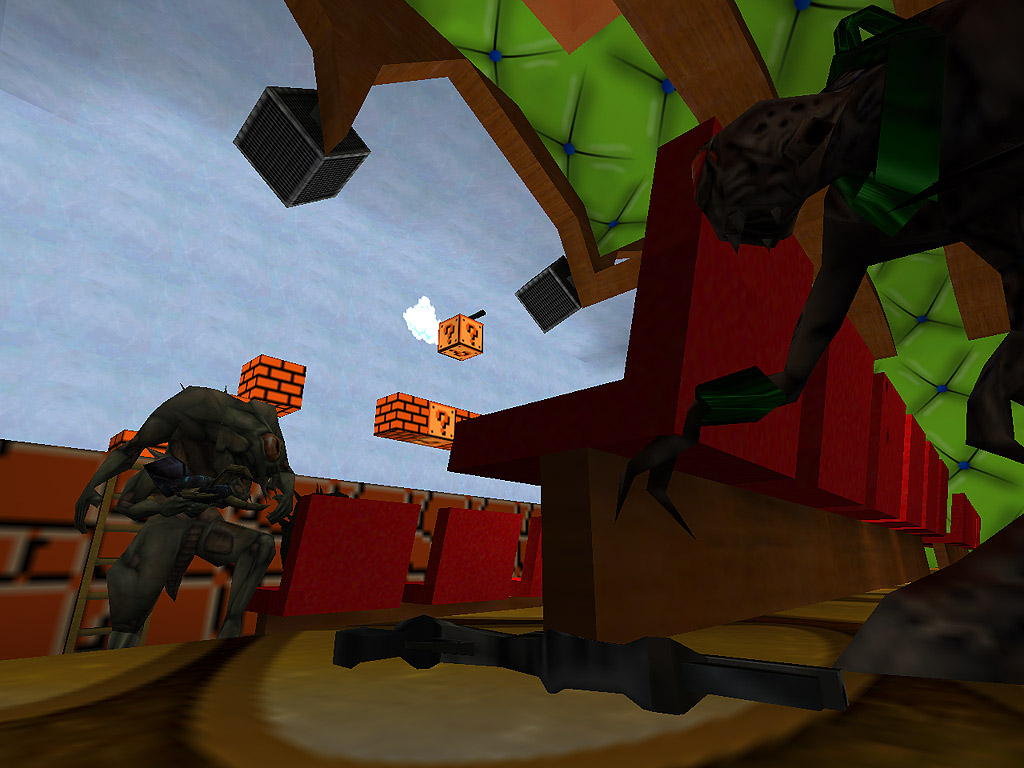 I should probably substantiate that claim. In both Mario and Half-Life, the game objective is to progress through stages by gathering items and defeating 'mini' foes. Climax scenes divide the story into levels or stages, and an over-arching narrative links these stages until the ultimate objective is reached at the end. Though these qualities that link the two games are, admittedly, pretty general, I think the narrative structures of the games, their search-and-find objectives, and the presence of goons that inhibit the main character along his path are enough to place Mario Brothers and Half-Life in a class of games that differs from others.
 I think that, in various ways, people today are playing the same games that people a generation before were playing; that is, it's less often the formal elements that change from game to game than the tools we are given to reach them. This is why platform has become so important in the modern gaming world, I think; technological innovation allows the same basic game structures to take on new dimensions that turn them into what is, partly (but not essentially) a new game.
So regardless of Scog's retrophilic opinion that these five specific games are the ones that will be 'played in heaven,' I argue that the formal elements of these games are important, in the grand scheme of things, primarily as the dawn of a genre, making it possible for other games to stand on their shoulders and exist as equally, if differntly, entertaining pastimes.


